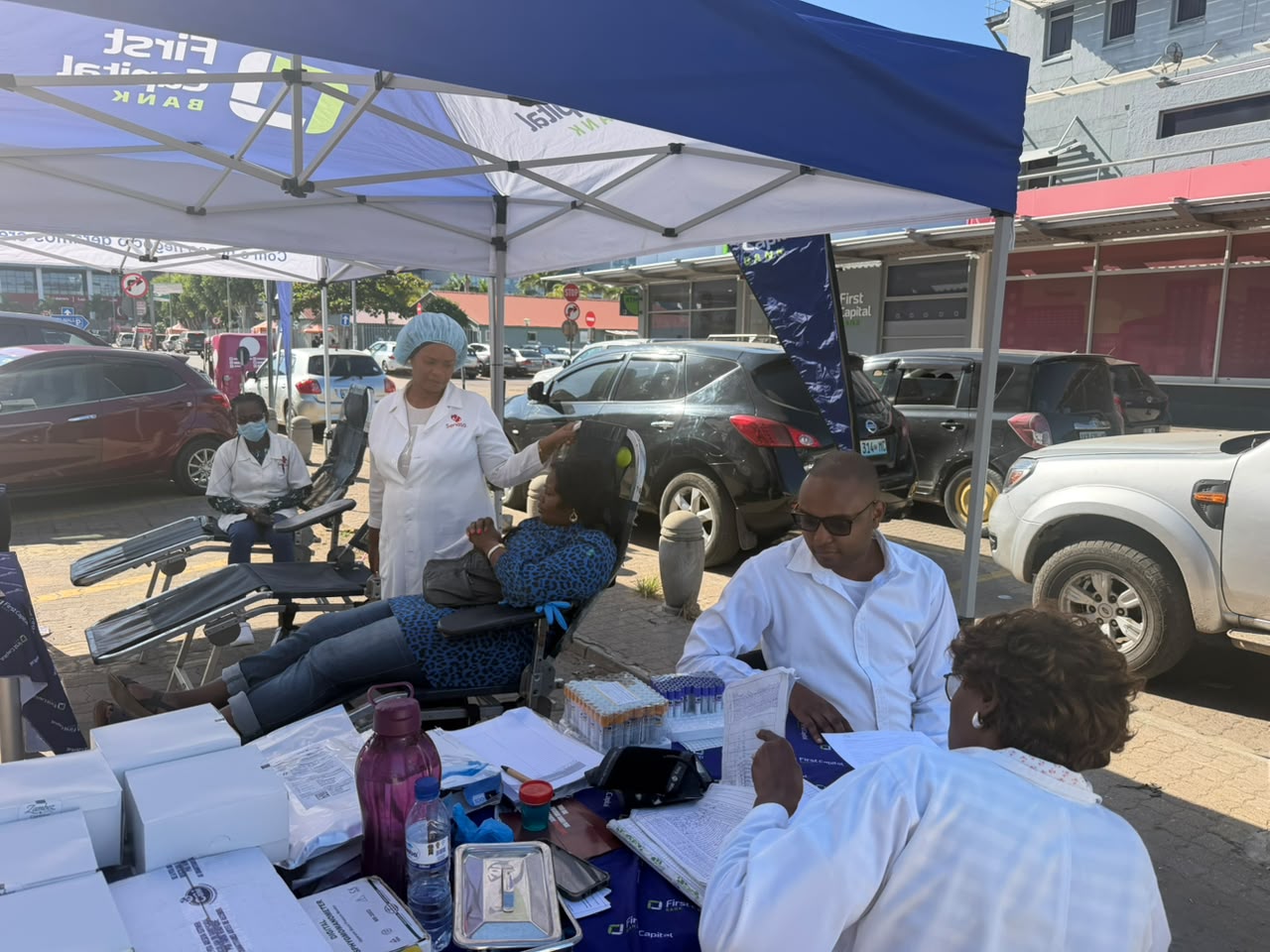
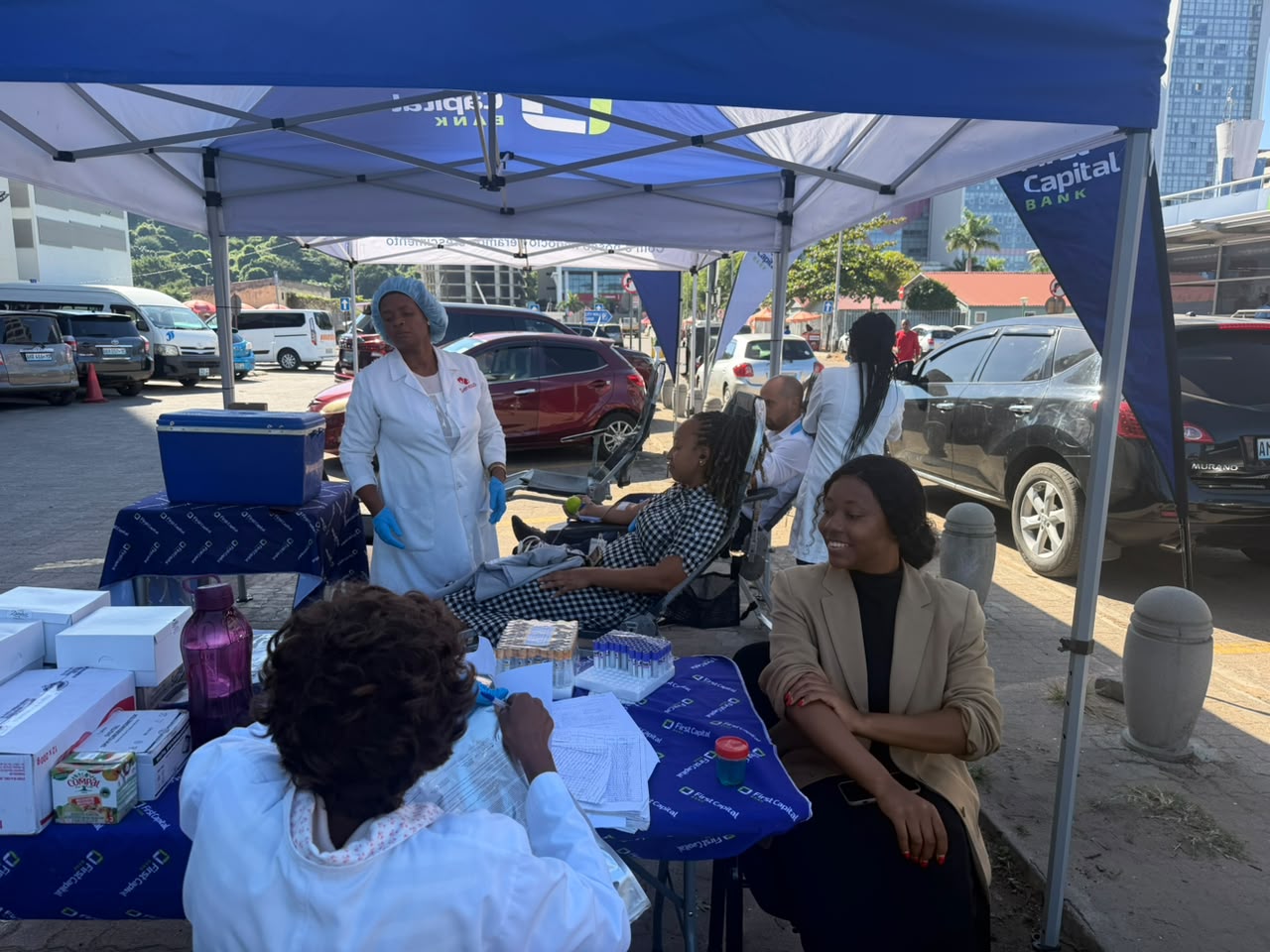
As part of the celebration of World Blood Donor Day, observed annually on 14 June, First Capital Bank, in partnership with the Blood Bank of Maputo Central Hospital, held a blood donation campaign on 18 June, reinforcing its commitment to promoting health and the well-being of communities.
The campaign took place at the First Capital Bank Head Office car park and was open to bank employees, companies located in the surrounding area, and members of the public passing through the location, enabling broad community participation in this solidarity initiative.
The initiative aimed to raise awareness of the importance of voluntary blood donation and to strengthen understanding of its humanitarian role in responding to patients’ needs in various clinical contexts, including medical emergencies, surgeries, and ongoing treatments. This activity continues the blood donation initiatives that First Capital Bank has been regularly promoting, including a similar campaign held on 13 March 2026, reaffirming the bank’s ongoing commitment to fostering a culture of solidarity among employees and the wider community.
During the latest campaign, 24 individuals donated blood, contributing to the replenishment of available reserves and to the availability of this vital resource for patient treatment and healthcare service needs.
During the initiative, therapy balls were also provided to donors during the blood collection process as a gesture of appreciation for their contribution. First Capital Bank also donated 15 therapy balls to the Blood Bank of Maputo Central Hospital for use in future campaigns.
Through this solidarity initiative, First Capital Bank reinforces its commitment to corporate social responsibility and to the promotion of values such as solidarity and citizenship. By supporting such a noble cause, the Bank contributes to strengthening the healthcare system and increasing the availability of blood — a vital resource capable of saving lives and improving the well-being of communities.